Aircraft crashes in Mourne during the Second World War
Ernie Cromie
During
the Second World War, Northern Ireland was one huge aircraft carrier, being the
location for 25 military air bases.
Collectively, these airfields served a great variety of purposes and it
was not unusual for an individual airfield to fulfil two or more roles
simultaneously. Some were bases for
combatant operations by Coastal and Fighter Commands of the Royal Air Force and
squadrons of the Royal Navy’s Fleet Air Arm.
One measure of their worth is that aircraft operating from them shot
down at least 7 German planes and sank at least 25 U-Boats.
Several
of the airfields, including the one at Greencastle, close to Kilkeel, were
intimately associated with the modification, re-assembly, repair or temporary
storage of large numbers of aircraft.
Others, again including Greencastle, had indispensable roles in the formal
training of aircrew in service with the RAF or the United States Army Air
Forces (USAAF). In fact, thousands of
men completed their operational flying training in Northern Ireland before
joining combat units elsewhere in the UK and farther afield. In this regard, it is of interest to note
that in the early aftermath of the USA’s declaration of war on Germany, it was
decided to locate most of the USAAF’s European Theatre familiarization training
in Northern Ireland, although in the event activities did not actually attain
the proportions initially envisaged.
Inevitably,
a price had to be paid for so much aerial activity, the saddest aspect of which
was the tragic loss of hundreds of airmen and airwomen killed on active service
here, the victims of flying accidents which resulted in hundreds of aircraft
being written off in Northern Ireland alone.
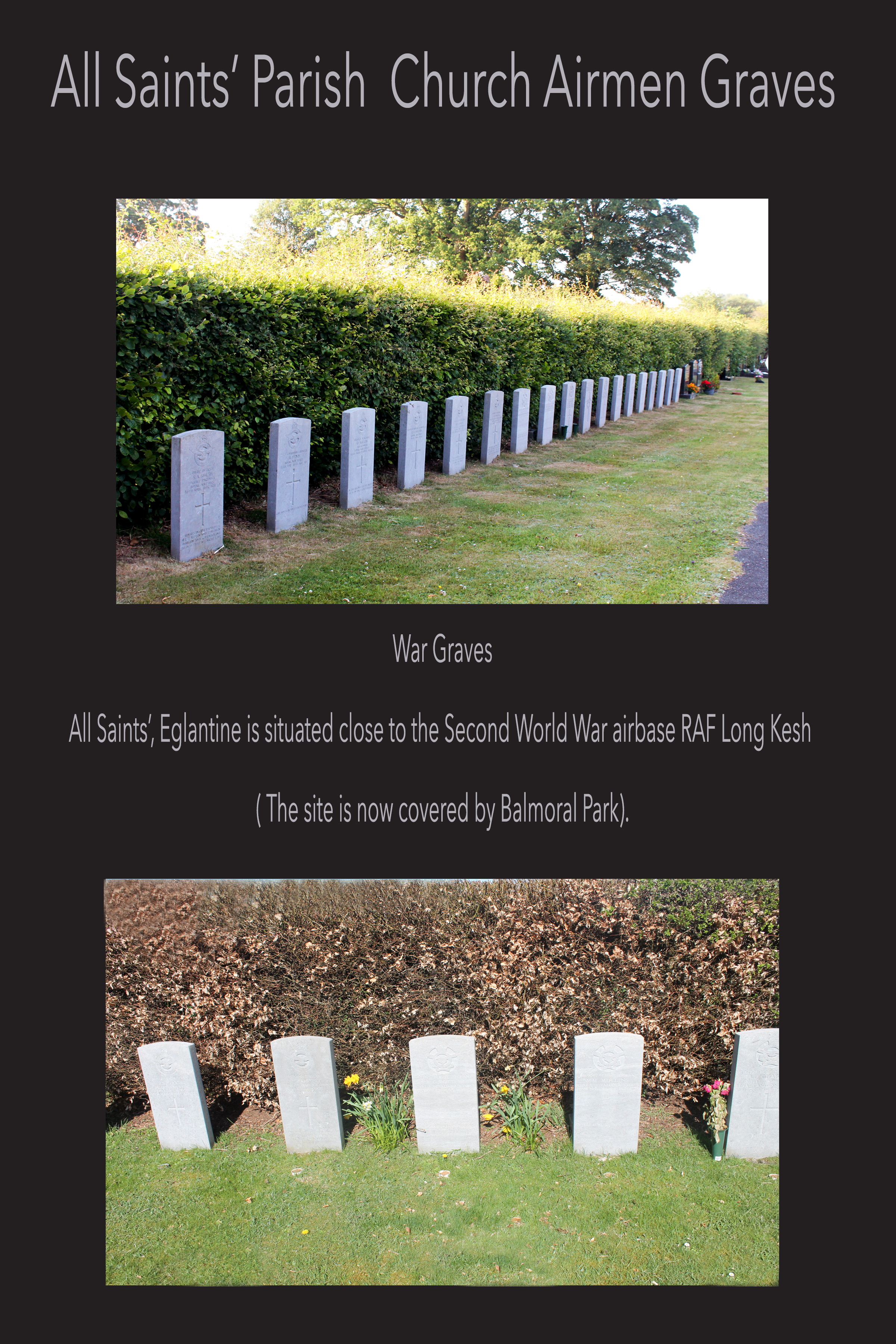
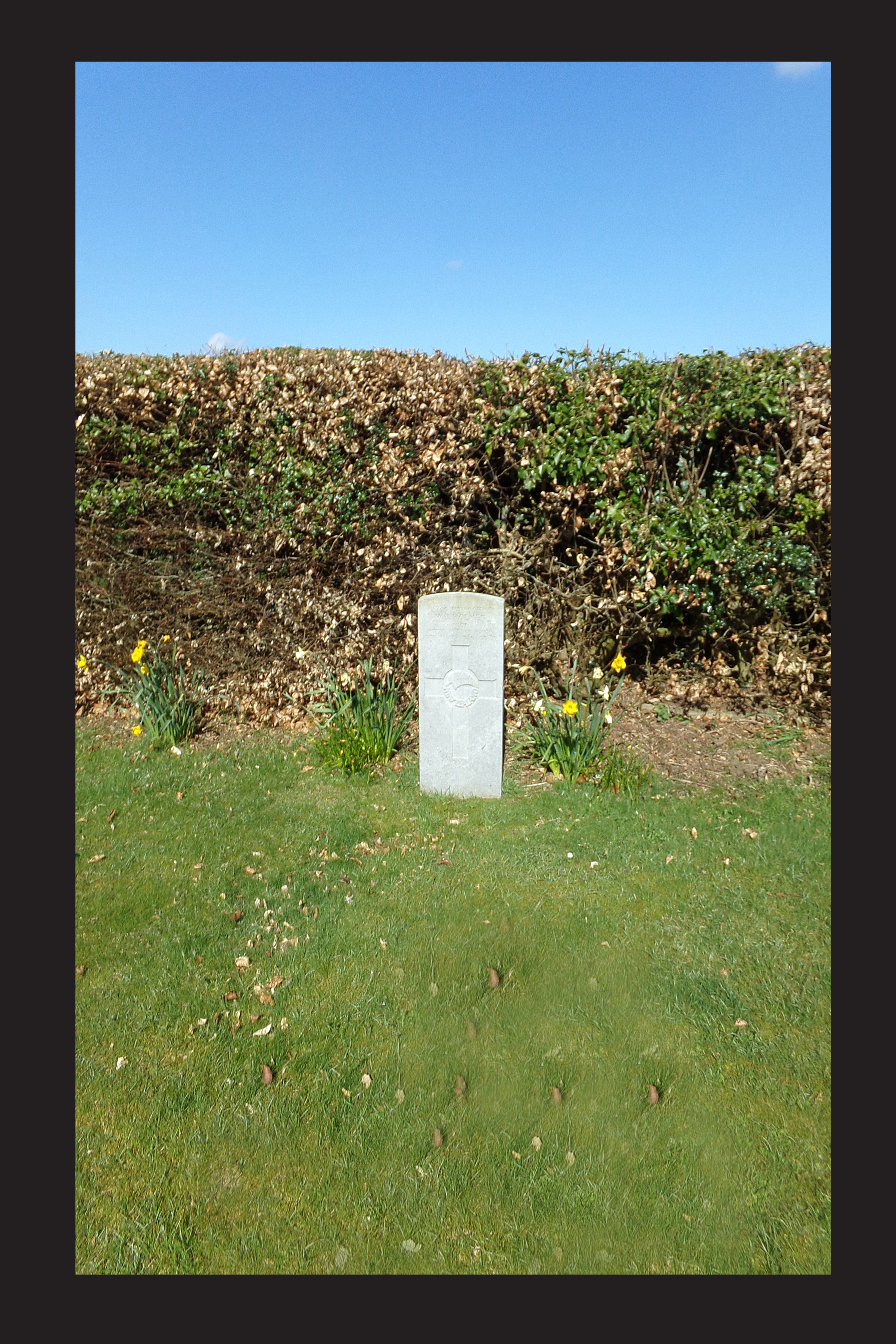
Poignant reminders of this are to be found in cemeteries throughout the
country, in the neat rows of War Graves which are easily recognised by the
characteristic Commonwealth War Graves Commission headstones. Nowadays, the aircraft accident statistics
seem incredible but, under the prevailing circumstances, they are perhaps
understandable. During the War, Northern
Ireland was a hive of flying activity associated not only with airfields here but
also in Great Britain. Some, such as
Limavady and Greencastle, were sited dangerously close to high ground in areas
subject to rapid changes in weather conditions, with predictable
consequences. Remarkably, though, it
would appear that no aircraft flying in or out of Greencastle came to grief for
that specific reason. Air traffic control
as we know it today was non-existent; such radio aids as were available were
sometimes unreliable and observance of black-out regulations added to the
natural hazards of night flying. With
large numbers of training units based here, accidents were only to be expected
but many experienced crews and first-line operational aircraft also perished
due to factors such as mechanical failure, errors of judgement attributable to
the stresses of operational flying, or just sheer bad luck. Moreover, some crashed aircraft were obsolete
or war-weary machines of suspect serviceability.
In
such circumstances, aircraft came to grief at many sites scattered throughout
Northern Ireland and, to a much lesser extent, Eire. Official records that I have researched
indicate that 9 aircraft were written off as a result of crashes in Mourne,
plus a further one in Mourne-related circumstances, but this may not be the
full story. Chronologically, the
aircraft involved and the circumstances are as follows; sites are identified on
the attached 1:50,000 scale OSNI map.
Westland Wallace K8699
The
first incident, in November 1941, involved a Westland Wallace, a two-seat,
single-engine biplane, general purpose type.
It originated in 1931 basically as a more powerful version of the
Westland Wapiti. By the outbreak of War,
most of the 80 or so Wallaces still in service with the RAF had been consigned
to target-towing duties and were used by a number of different units until
1943.
One
such unit was No 1 Ground Defence Gunnery School, which was based at Ronaldsway
in the Isle of Man from 1940 until its disbandment in 1943. Its purpose was to train airmen in gunnery
for the defence of airfields against air attack. One of the Wallaces assigned to No 1 GDGS was
K8699, prior to which it had been on strength with the Armament Training Camp
and Bombing and Gunnery School at Aldergrove, where it towed targets over the
Lough Neagh ranges.
On 1
November 1941, for reasons which are the subject of further research, this
particular Wallace was in the vicinity of Carlingford Lough when problems
developed and the pilot was obliged to carry out a forced landing. This he managed to do in a field just to the
east of Ballyedmond House, near the shore of the lough. Damage to the aircraft was not very extensive
apparently and it was dismantled before being taken away by road. However, in view of its age and condition, it
was decided to write it off.
Wellington X3599
It
can reasonably be claimed that the twin-engined Wellington bomber, known
affectionately as the ‘Wimpey’, was the mainstay of RAF Bomber Command’s night
raids over Germany in the opening phases of the War, before four-engined heavy
bombers became available in large numbers.
At one time during the winter of 1941-42, Bomber Command could call upon
21 operational squadrons of Wellingtons and in the first 1000-bomber raid, on
Cologne in May 1942, over half the aircraft that took part were
Wellingtons. Chiefly by virtue of its
ingenious geodetic lattice construction, designed by the famous Barnes Wallis,
the Wellington was immensely strong and could take a lot of punishment from
flak, yet return home safely.
On 16March 1942, a Wellington from No 57 Squadron RAF left its base at
Feltwell in Norfolk for a non-operational flight to Aldergrove. The aircraft, serial number X3599, was
carrying its normal crew of 6 and a passenger, 24-year-old Miss Barbara
Blakiston-Houston from Killyleagh, Co Down, who was a Section Officer in the
Women’s Auxiliary Air Force. En route,
bad weather was encountered which, in the Newcastle area, took the form of a
very low cloud base which obscured the mass of the Mournes. Apparently, due to the prevailing conditions,
the crew became disorientated, as a result of which the aircraft strayed off
course and, at 12.30 pm, flew into the rock-strewn lower slopes of Thomas’s
Mountain at a point near the Black Stairs on the edge of the Glen River.
No
aircraft could have survived such an occurrence and the Wellington was totally
destroyed by the force of impact and resulting fire. Miraculously, one person survived, albeit
injured, but the other occupants were killed, including Miss Blakiston-Houston,
who was buried in the family plot at Loughinisland Church of Ireland Graveyard,
Seaforde. The pilot, Flying Officer H E
Hunter, Royal New Zealand Air Force, age 25, married, from Christchurch and the
air observer Flying Officer J W Elliott, Royal Canadian Air Force, age 26,
married, from Toronto, were buried in Belfast City Cemetery.
The
impact scar attributable to this particular tragedy is still plainly evident;
up to 1986 the crash site was also marked by the partially buried and badly
damaged remains of the aircraft’s engines.
With permission from the Ministry of Defence and the landowner, and helicopter
assistance from the Army Air Corps, the engines and other components were moved
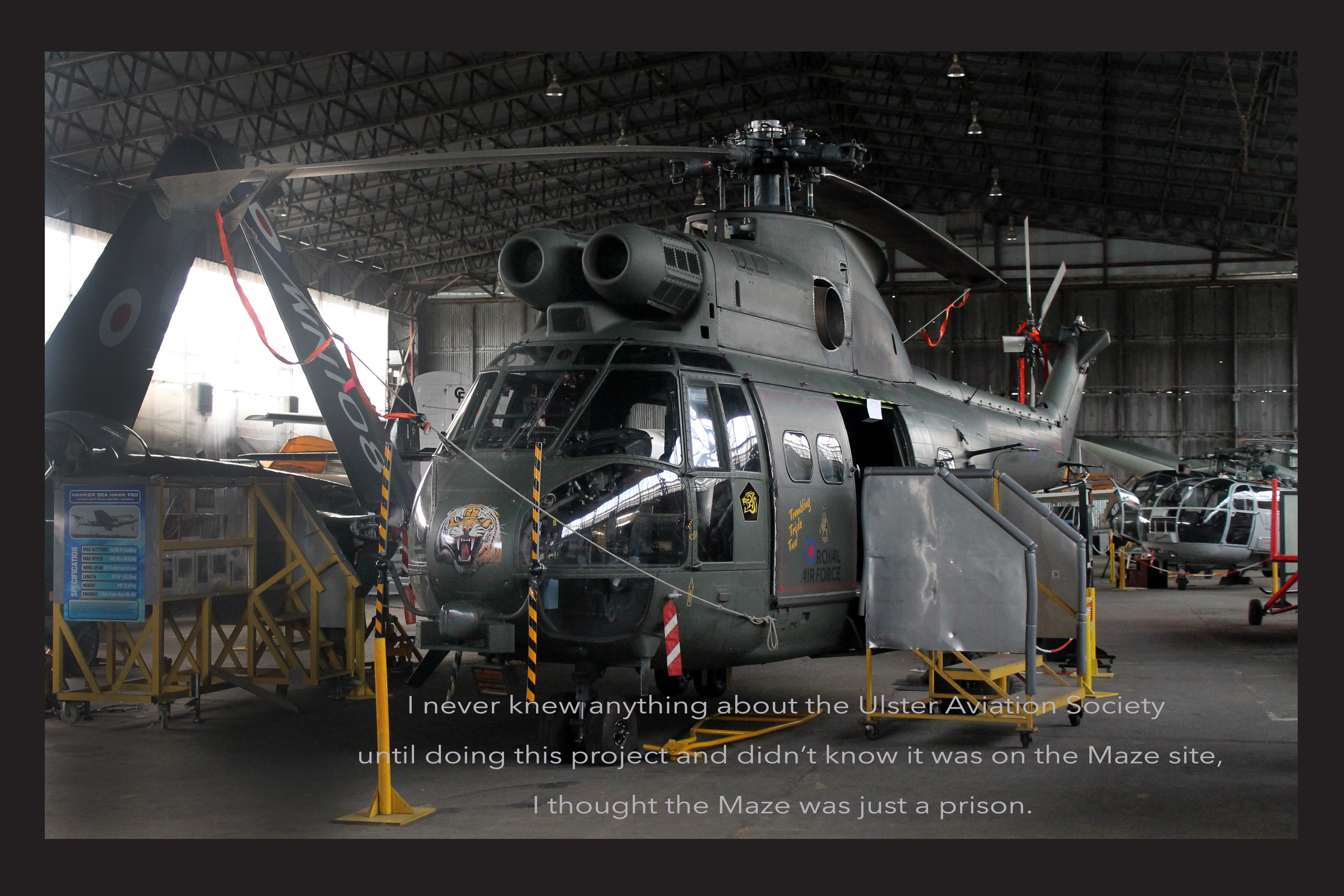
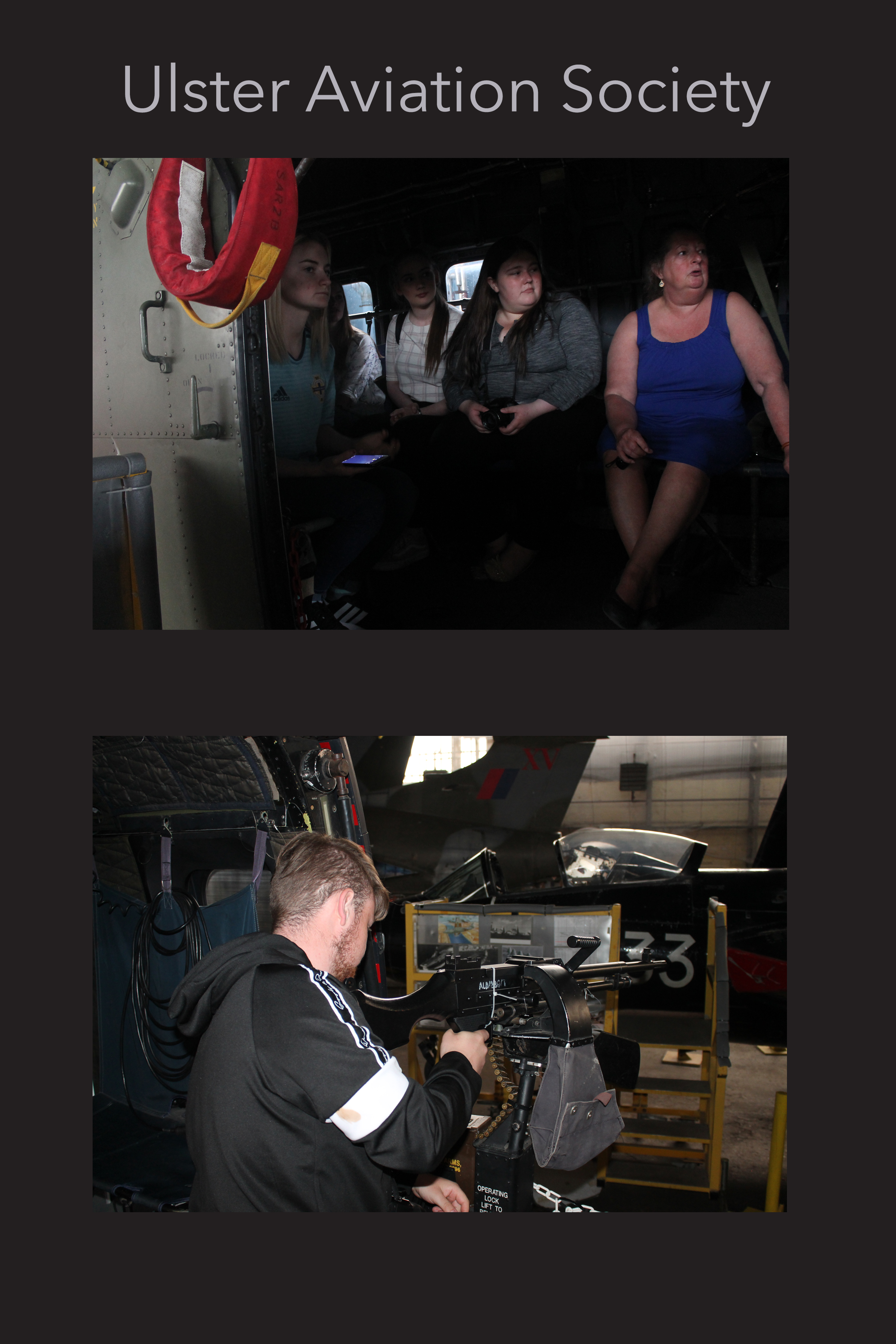
from the site by members of the Ulster Aviation Society and taken to the Ulster
Folk and Transport Museum at Cultra.
Hurricane Z7064
In
the early years of the War, pending the availability of sufficient numbers of
escort aircraft carriers, the provision of immediate fighter cover to defend
convoys against attacks by long-range German aircraft such as the Focke Wulf
Condor posed apparently insurmountable problems. As a temporary expedient, Fighter Catapult
Ships were created. These were existing
auxiliary surface vessels of the Royal Navy which were hastily modified to
accommodate two or three fighters, normally Fulmars or Hurricanes. The aircraft were adapted to be individually
placed on a special rig in the ship’s bows, from which they were catapulted by
means of a special attachment incorporating rockets. After launch and enemy engagement, the pilot
had the choice of trying to reach land or ditch in the sea near the convoy, in
the hope of being picked up. Pilots and
aircraft to sustain this hazardous activity were provided by No 804 Squadron,
Fleet Air Arm, which was shore-based at Sydenham, Belfast, from May 1941 to May
1942.
On 1
April 1942, two Hurricanes from No 804 Squadron were engaged in non-regular
duties in an Army Co-operation exercise with ground troops in the Annalong
area. While carrying out dummy attacks
on gun positions close to Head Road, one of the Hurricanes, serial number Z7064,
piloted by Sub Lieutenant G P Mollinson, pulled out of a high speed dive too
quickly, went out of control, and crashed through a stone wall near Rourke’s
Park. Tragically, the young pilot was
killed and the aircraft totally destroyed.
Beaufighter X7822
Ballyhalbert
airfield, on the Ards Peninsula, was Northern Ireland’s most important fighter
station, being responsible for the defence of Belfast and the eastern half of
the country. The airfield accommodated
considerable numbers and types of aircraft which, by July 1942, included night
fighters in the form of Beaufighters of No 153 Squadron, RAF.
On
the night of 19 July 1942, Beaufighter X7822 was airborne on a practice
interception and radar calibration exercise.
Such exercises often resulted in aircraft ranging far out from the
airfield. One hour and forty minutes
after taking off from Ballyhalbert, X7822 was returning when it flew straight
into the southeastern shoulder of Shanlieve Mountain to the northwest of
Attical. The aircraft was totally destroyed
by the force of the impact and resulting fire, both members of the crew being
killed. They were Pilot Officer J P Sadd
(pilot), age 24, and Sergeant M Wayne (navigator/radar operator), age 26. Both were taken to England for burial. The resultant Court of Inquiry, finding it
impossible to come to a firm conclusion about the cause of the disaster,
offered the explanation that in setting course to return to Ballyhalbert, the
crew had ‘homed’ on to an incorrect radio beacon.
Wellington X9820
By
the autumn of 1943, Wellington aircraft had completed their useful life with RAF
Bomber Command. Meanwhile, growing
numbers of them were being pressed into fulfilling new roles, including the
training of pilots and crews to perform various functions. For instance, No 105 Operational Training
Unit, based at Bramcote in the East Midlands of England, was equipped with
Wellingtons upon its formation in April 1943 to train aircrew for transporting
airborne forces.
The
training routine involved a daily shuttle service to and from Nutts Corner, and
it was in the course of one such flight on 12 September 1943 that Wellington
X9820 met with disaster. Once again, bad
weather was a contributory factor, the aircraft being off-course and flying in
cloud when it hit the northwestern face of Slieve Commedagh, 150 feet below the
summit. Its three crew members were
killed: Flight Sergeant J S Price, RNZAF (pilot), age 33, from Invercargill,
New Zealand; Sergeant T Brewin, age 20 and Sergeant H A Walters, also age 20. Flight Sergeant Price was later buried in
Ardglass Church of Ireland Graveyard.
Following
the crash of a military aircraft in the UK during the War, it was customary for
the site to be visited by an RAF salvage team in order to make the area safe
and recover reusable components or valuable scrap metal for melting down. In Northern Ireland, the RAF unit responsible
for this task was No 226 Maintenance Unit, based at Mallusk near Belfast. Notwithstanding the remoteness and rugged
nature of the terrain in the vicinity of Slieve Commedagh, Unit personnel were
ordered to recover as much wreckage as possible and a salvage team went to the
site on 5 October 1943. According to
entries in the Maintenance Unit’s Record Book, engines, propellers, wings and
part of the Wellington’s undercarriage were manhandled and dragged down a cliff
and over a distance of about 5 miles to the nearest point to which a special
‘Queen Mary’ trailer could be brought.
To facilitate matters, use was made of a special tracked jeep borrowed
from the USAAF at Langford Lodge, supplemented by a tractor. Both vehicles bogged down many times in soft,
boulder-strewn ground but eventually, after many hours of arduous work, the
process was completed.
Havoc AX924
Reference
was made earlier to USAAF training activities in Northern Ireland. These were under the overall administrative
control of 8th Air Force Composite Command, which organization was
based at Kircassock House near Magheralin in County Down. The organization created specifically for
training purposes was known as a Combat Crew Replacement Center Group, four of
which were activated here. A CCRC Group
was normally located at a particular airfield but the 4th CCRC used
two – Cluntoe in County Tyrone and Greencastle in County Down. The function of this particular CCRC was to
take heavy bomber crews, each of 10 personnel who had received basic training
in the USA, and impart to them the knowledge and skills necessary for combat
operations in the European Theatre of Operations. At Greencastle, there was a training school
for air-to-air and ground-to-air gunners, to facilitate which the 4th
Gunnery and Tow Target Flight was formed there in December 1943. For the most part, the Flight’s duties consisted
of towing sleeve targets over the coastal target range at Derryogue. For this purpose it was equipped with several
types of aircraft, including twin-engined Havocs, a few of which were on loan
from the RAF, as was AX924. During
mid-morning on 3 March 1944 however, in conditions of good visibility below a
well-broken cloud base at 1500 feet elevation, the aircraft was engaged in simulated
bombing of artillery positions manned by US Army personnel on exercise in the
valley of the Yellow Water River. As a
Captain in a Medical Detachment with the troops later testified, the Havoc had made
several runs up and down the valley at very low heights above ground level, in
very turbulent wind conditions. On its
last run, from north to south, the Captain noticed that the aircraft was flying
very slowly, about 200 feet above the ground, when its left wing suddenly
dropped and it hit the valley floor about 500 yards east of Crocknafeola Wood
in a steep dive, breaking apart and catching fire. The two men on board, pilot 1st
Lieutenant George C Woodman from New Hampshire and Staff Sergeant Ovis P Courville
from Texas died instantly. They were
subsequently buried in the US Military Cemetery at Lisnabreeny near Belfast,
from where their remains were exhumed in 1948 and repatriated to the USA for
re-burial in their home States.
B-26 Marauder 41-18150
The
first CCRC Group to be activated in Northern Ireland, in August 1943, was the 3rd
CCRC, which was based at Toome airfield.
Its particular function was to train medium bomber crews, each of 5-6
personnel who had also received basic training in the USA. Between August 1943 and October 1944, well
over 600 (possibly as many as 800) crews, equivalent to about 3000-4000 men,
were trained at Toome and sent to operational squadrons in East Anglia.
No 3
CCRC used two types of twin-engined aircraft, the A-20 Havoc and B-26
Marauder. The latter was one of the most
elegant looking bombers to appear in the early years of the War, but earned a
bad reputation for being difficult to handle because of high wing loading. This initial problem was soon overcome however
and does not appear to have been a significant factor which led to the crash,
which occurred on 10 April 1944. On this
occasion, the Mournes were again completely enveloped in low cloud and mist
which, among other things, made for unpleasant working conditions in the
quarries near the head of the valley of the Bloody Bridge River. One of the men working there that day was the
late James Cousins of Glasdrumman. Forty
years after the tragedy, he recalled for me the minutes before the crash: “We
heard the engines of an aeroplane but couldn’t see it because of the mist. The noise was faint at first but got louder
and louder as the plane seemed to come in from the sea and fly up towards us. We were very scared it was going to crash on
top of us when suddenly the engines revved up and the plane seemed to turn away
to the south above our heads. The noise
died away and we went back to work, feeling very thankful.”
Remarkably,
what James and his work mates did not realize, evidently because the
intervening ridge and thick mist effectively prevented them from sensing the
impact, was that the Marauder, having apparently changed course just moments
too late, had flown into the rock-faced southeast slopes of Chimney Rock
Mountain and completely disintegrated, leaving a trail of bodies, wreckage and
debris scattered across the side of the mountain and into Spence’s River
valley, where one of its engines can be seen to this day, partially buried in
rocky ground. Tragically, the crew of
five were killed. It was the first fatal
accident to an aircraft of No 3 CCRC and, because of the prevailing bad
weather, it was several days before the crash site was discovered and the
bodies recovered. They were 2nd
Lieutenant Howell C Osborne Jr., from Arkansas, 2nd Lieutenant Chester
M Turner, from Kansas, Staff Sergeant Roy R Cappe, from Pennsylvania, Sergeant
J Gyovai, from Illinois and Sergeant William J Devenney, from
Pennsylvania. They were subsequently
buried in the US Military Cemetery at Lisnabreeny, Belfast but together with
the remains from all 143 additional graves at Lisnabreeny, were exhumed in 1948
and re-interred in cemeteries in their home States, excepting the body of Sgt
Devenney, which was re-interred in the US Military Cemetery at Madingly, near
Cambridge in England.
According
to official USAAF records, the Marauder was one of three which had been on a
gunnery training mission near Greencastle and were returning to Toome in
formation just prior to the crash. At
the resultant Inquiry, the pilot of the Marauder which had been leading the
formation testified to the effect that Lieutenant Osborne had been flying 41-18150
on his left wing but well out of position, 400 feet lower and about 1500 feet
to the rear. When over the sea about
three miles off Kilkeel, at an altitude of 2500 feet, the formation began
circling to climb above cloud which was building up over the Mournes (recorded
subsequently as stratus cloud at 1000 feet) when 41-18150 disappeared into the
cloud and was not heard from again, despite repeated radio calls giving the
leading aircraft’s course and altitude.
The cause of the tragedy is recorded as: ‘Major cause: pilot error,
Minor cause: weather.’
Mosquito NS996
Legendary
is an adjective often applied to human exploits; it is also applicable to a few
aircraft. The Spitfire is an obvious
example; so too is the de Havilland Mosquito.
Apart from its largely wooden construction and outstanding performance,
the Mosquito was one of the most versatile aircraft ever produced, having
served as a bomber, fighter-bomber, night fighter and photo-reconnaissance
aircraft to name but a few of its operational roles. In the latter part of the War, Mosquitos were
increasingly supplied to Operational Training Units, one of which was No 60 OTU
at High Ercall in Shropshire. Its
function was to train aircrew in night intruder tactics and from time to time
its Mosquitos ranged as far afield as Northern Ireland in the course of night
exercises, Long Kesh airfield being the ‘target’ on various occasions.
Whether
or not Long Kesh was the target on the night of 12/13 January 1945 is uncertain
but in any event NS996 left High Ercall and headed north over the Irish
Sea. The aircraft did not return however
and searches were initiated but due to the extreme weather conditions that
winter, it was not until the beginning of March that the wreckage was
identified and the bodies of the two crew recovered from the crash site on the
southern slopes of Slieve Commedagh, just above The Castles. In October 1945, a salvage team from No 226
MU went to the site but decided that salvage was too difficult and pointless
because of the remoteness of the site and nature of the wreckage, most of which
was simply pushed into a nearby ravine and buried. From time to time since then, portions of
wreckage have been unearthed and carried downstream by flood waters gushing
through the ravine.
A-20 Havoc 43-9924
Following
the transfer of the airfield at Greencastle from RAF to USAAF control in August
1943, its initial role was as a satellite facility for the Air Depot at
Langford Lodge, where there simply wasn’t enough space to accommodate the many
hundreds of aircraft that were arriving annually to be modified, repaired and
serviced there for use by the USAAF in the United Kingdom, pending the construction
of additional aircraft hardstands which were eventually provided at both
airfields. As a result, up until it was
closed in May 1945, hundreds of aircraft representing many of the types in the
vast USAAF inventory were temporarily stored at Greencastle until they could be
taken to the main workshops at Langford Lodge or, in some cases, even processed
at Greencastle itself by personnel of the Lockheed Overseas Corporation and
USAAF units sent there for that specific purpose.
So it
was that, at approximately 1600 hours in the afternoon of 12 March 1945, Havoc
43-9924, piloted by 1st Lieutenant Richard E Townsend from Maryland
and with no one else on board, departed Greencastle to fly to Langford
Lodge. He took off from runway 21 and
commenced a left turn to head north but appeared to be having trouble with the
left engine, which kept cutting out. He
completed a circuit and lined up for an emergency landing on the same runway,
by which time he had shut down the left engine.
To make matters worse, only the nose landing gear would deploy, leaving
him no option but to attempt a further go-around. Unfortunately, he again made a left turn but
this time, contrary to standard procedure in circumstances of engine failure, it
was towards the completely dead engine, which resulted in his losing control with
the result that the Havoc spun into the sea just offshore from the
airfield. Emergency services managed to
reach the wreck quite quickly but, regrettably, Lieutenant Townsend was found
dead in the cockpit, fatally injured by the impact. He was subsequently buried in Lisnabreeny
Cemetery, from where his body was exhumed in 1948 and re-buried in the US
Military Cemetery at Madingly, near Cambridge.
Sunderland NJ186
Although
the subject of the final incident did not actually come to grief in Mourne, no
account of this kind would be complete without reference to it. It occurred on Sunday, 20 May 1945, on which
date Sunderland NJ186 from No 423 Squadron Royal Canadian Air Force left its
base at Castle Archdale to search for surrendering U-Boats which it was feared
might make a desperate dash for freedom through the Irish Sea. Flight Lieutenant Washington, navigator of
the Sunderland, takes up the story, “…. The weather was foul. Castle Archdale was socked in tight with no
visibility whatsoever. This was not
unusual; it was our motto that we flew when seagulls walked! At precisely 0700 hours we became airborne,
loaded with 2200 gallons of fuel, a ton of depth charges and full load of
ammunition …. It was always disconcerting to me to take off ‘blind’ and I
requested we circle to a height of 4000 feet hoping to break cloud before
setting course. We didn’t, so I was
forced to use a dubious wind forecast and we continued to fly in ten tenths
cloud …. Our Sunderland had recently been equipped with an early model radar
which appeared to identify physical landmarks appropriate to our intended
track. Marvelling at this amazing
invention which could render dead-reckoning navigation obsolete, I went to the
flight deck and, standing between the 1st and 2nd pilots
(Flight Lieutenant Gerry Allen and Flight Lieutenant ‘Ole’ Olsen), I said, ‘we
have crossed Ireland and you can now descend over the Irish Sea.’ Instead of descending in normal fashion, our
captain in a moment of playfulness or exasperation nosed down and we were in
rapid descent. I had just finished saying,
‘for Christ’s sake Gerry, you don’t have to play dive bomber’ when I saw solid
land ahead. At the same instant, I saw
the 2nd pilot’s left forearm push all four throttles full ahead to
the fire wall and his right hand pulled back on the control column. A split second later, we lurched and slowed
perceptibly and there appeared in front of the ‘boat an orange flash which
blotted out all else. In addition to the
surge in engine power, I heard a terrible grinding, crunching sound.”
The
Sunderland, which was about 12 miles south of its intended track, had in fact
struck the summit of Slieve Fadda near Rostrevor. Miraculously, it was still flying and only one
member of the crew had been slightly injured but an inspection revealed that
the bottom of the hull was ripped away together with the galley containing
stove, table and benches. The starboard
float, aileron and wing tip were gone, the radar, radio and electrical systems
were seriously damaged and the air speed indicator was unserviceable. In addition, a crack several millimetres wide
had developed at the fuselage/starboard wing junction. Fortuitously, not long afterwards, the solid
overcast opened, revealing Jurby airfield on the Isle of Man where Gerry Allen
managed to crash-land the ‘boat on one runway, in blatant disregard of an
instruction from the control tower operator to use an alternative and despite
being threatened with court-martial!
Despite further damage and a resultant fire, the crew succeeded in
evacuating the Sunderland just in time to escape the huge explosion that
occurred when the depth charges and fuel tanks blew up, hurling a portion of
wreckage half a mile on to Jurby beach and shattering windows for miles
around. To add insult to injury, the
crew were arrested! Remarkably, a new
pilot to the squadron had been on board for a familiarization flight – what an
induction!
In
June, a team from No 226 MU went to Slieve Fadda and recovered portions of
wreckage that had been torn from the Sunderland in the initial impact.
It is
entirely possible that this account may stimulate some readers to explore the
sites referred to. This is
understandable, but please exercise care as the terrain is difficult and
potentially dangerous. In addition, it
should be borne in mind that people met their deaths at almost all of the
sites, which should be treated with due respect. Finally, be reminded that any site
investigations which would involve interfering, however superficially, with
portions of aircraft, personal artefacts or human remains are subject to
licences which can only be obtained from the Ministry of Defence, under The
Protection Of Military Remains Act, 1986.
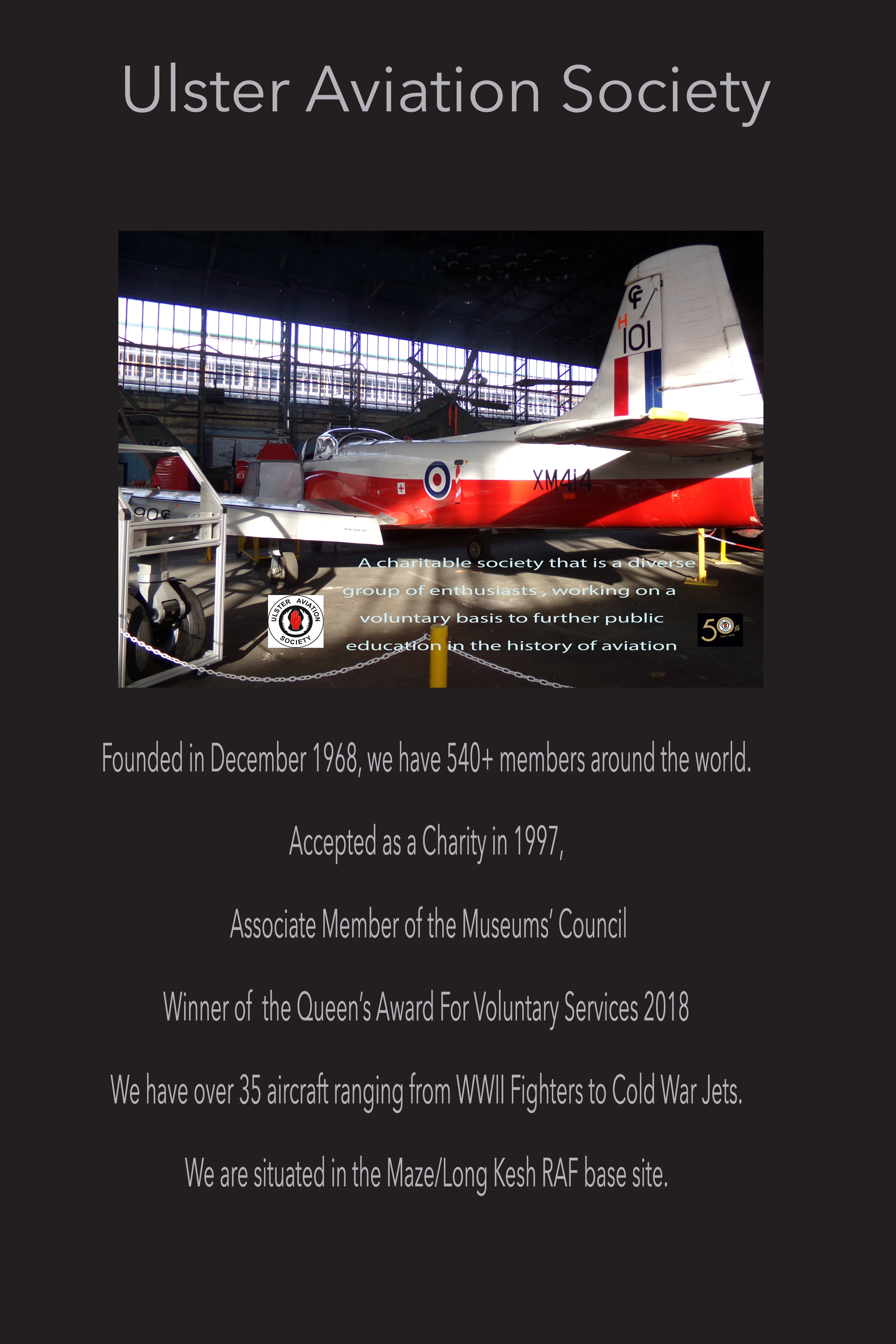
Ernie Cromie
Ulster
Aviation Society
August
2013




 Through Your Eyes